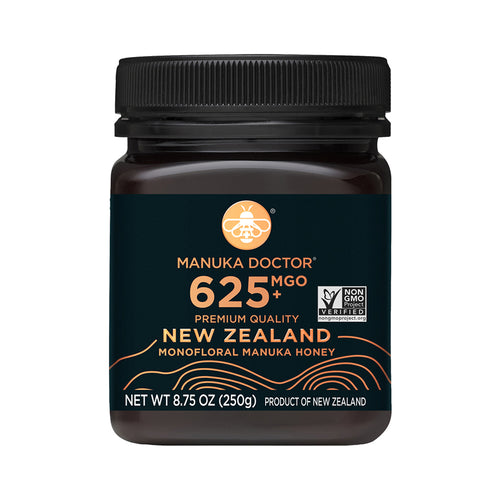
Autumn and winter are a period in which our body requires special support. Low temperatures, snow, wind and rapidly spreading germs promote the development of infections and deprive us of strength. New Zealand Mānuka honey can be a natural immune wellbeeing(R) support during this period . A teaspoon a day can really work wonders!
 Discover the unique properties of Mānuka honey
Mānuka honey has a thick, creamy texture, brown color and a slightly herbal taste. It is made from the nectar of the manuka shrub — a plant with exceptional health values, growing exclusively on the sandy soils of New Zealand. The characteristic origin is one of the surest determinants of the authenticity of Mānuka honey. The main feature that distinguishes it from other honeys is the high content of methylglyoxal (MGO). This natural compound has an extremely strong antibacterial effect – it inhibits the activity of bacterial enzymes and makes it difficult for microorganisms to multiply. Mānuka honey is also rich in other valuable bioactive ingredients such as antioxidants, amino acids, vitamins and minerals.
How Mānuka honey Supports Your Body When You Need It Most
Mānuka honey is valued primarily for its ability to support the body's natural defenses. Thanks to its antibacterial properties, it is a very valuable element of prevention during the infectious season. Regular intake of small amounts of Mānuka honey can also alleviate the first ailments accompanying infections and support the regeneration of the mucous membranes. Its thick, coating texture soothes irritations, reduces scratching in the throat and can soothe coughs. It is worth remembering that the potency of Mānuka honey is determined by the MGO content — the higher the value stated on the label, the greater the antibacterial activity and stability of the product.

How to include Mānuka honey in your daily diet?
The ideas for using manuka honey are almost endless! The easiest way to include this product in your daily diet is to simply eat it with a spoon — in this form, it retains the full of its valuable properties. The most common is 1-2 teaspoons a day, preferably in the morning or evening. You can also add Mānuka honey to breakfast, for example to porridge, yogurt, smoothie or sandwich. It is also perfect as an ingredient in salad dressing or a natural topping for pancakes. A popular solution is "shots" with Mānuka honey and ingredients known to support immunity, such as ginger, turmeric, lemon, raspberries or chokeberry. A tasty and healthy proposition will also be a herbal or fruit infusion with the addition of honey. It is only important not to add it to boiling water – too high a temperature can reduce the activity of MGO and enzymes.
Manuka Doctor, or Mānuka honey of the highest quality
Mānuka honey is a natural remedy that is especially worth reaching for in the autumn and winter season. When choosing the right product, it is worth paying attention to several issues that directly affect its quality, and thus its antibacterial effectiveness. Original Mānuka honey comes exclusively from New Zealand, should be packaged on site to avoid the risk of contamination during repackaging, and undergo independent inspections to confirm the MGO content. All these criteria are met by Manuka Doctor honey. The company follows the philosophy of "from beehive to home", has 10,000 own beehives in New Zealand, and the honey obtained from them is 100% pure, unpasteurized and originally packaged. In this form, it reaches recipients all over the world, becoming their natural ally in the fight against infections.